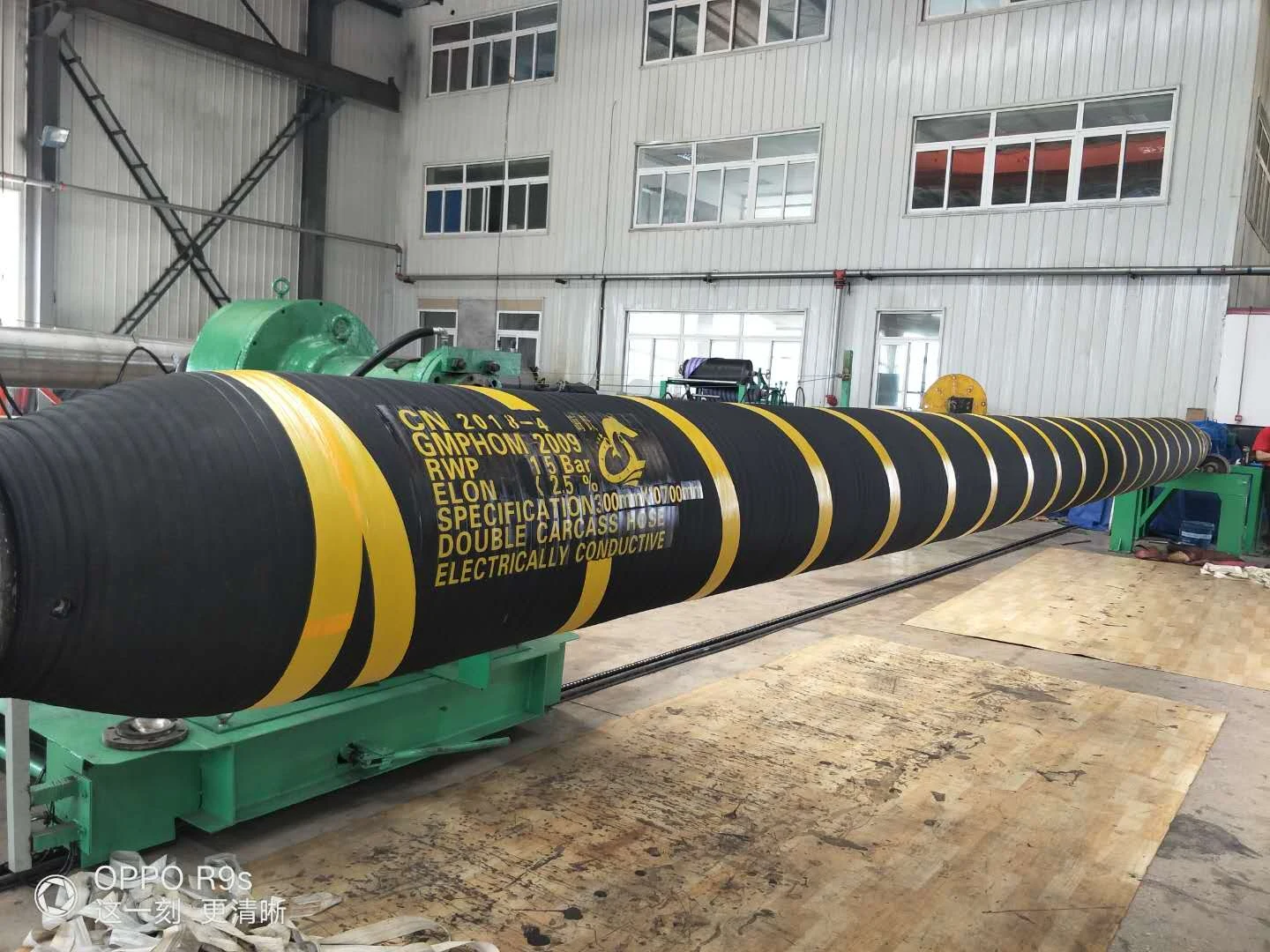
Hose positions and floating mainline configurations
A floating mainline forms part of an offshore oil transfer system. Mainline sections, connection ends and other hose positions have different layouts and loading conditions. The same bore does not make two hoses interchangeable. Provide the line arrangement, connection position, flange interfaces and required quantity when discussing a configuration.
Select for the fluid and operating conditions
Specify the transferred fluid, working pressure, design temperature, hose bore, individual section length and bending arrangement. An STS ship-to-ship transfer project also needs a description of the connections, interfaces and operating requirements. Confirm suitability with the technical team; one floating hose configuration cannot be assumed suitable for every STS application.
Connect manufacturing with project testing
Haiyue uses winding and forming equipment and conducts hydrostatic, adhesion, tensile, torsion and bending performance tests. Confirm the required test scope, acceptance criteria and delivery documents during project discussions. Historical specification documents can support a discussion of hose construction but do not replace the technical documents agreed for your project.
Product selection questions
What information is needed for a floating oil hose inquiry?
Provide the line arrangement, connection position, fluid, pressure and temperature, bore, individual section length, flange requirements, quantity and proposed inspection requirements. Existing hose drawings or project data sheets can help the team check interfaces and operating conditions.
Can a floating oil hose replace a submarine oil hose?
Surface and underwater hoses face different layouts and loading conditions. Recheck the installation position, interfaces, bending requirements and operating conditions. Matching bore and length alone is not enough to confirm interchangeability.